
A Tour Guide for Journalists
Step outside and take a walk with your community
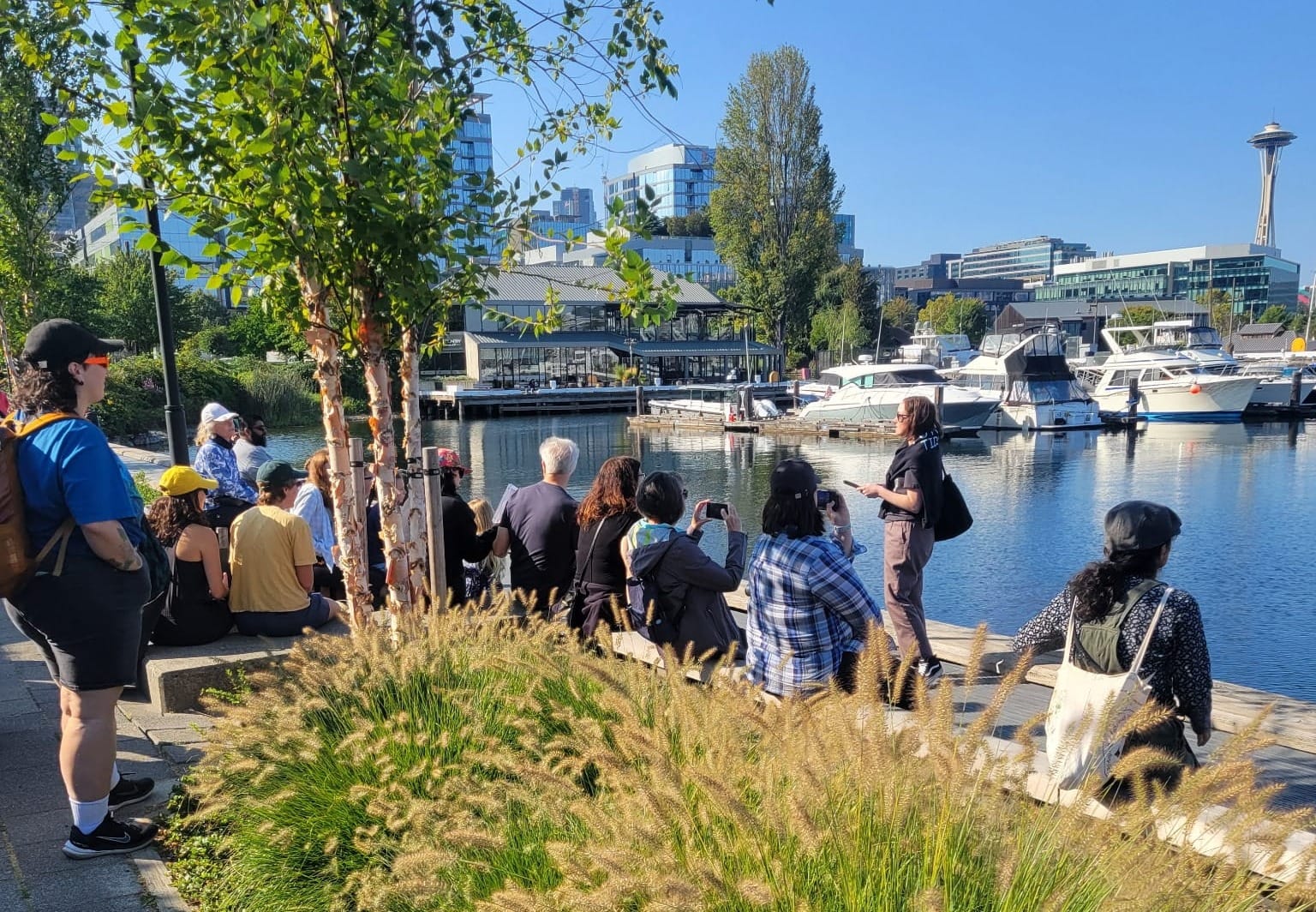
Bring local journalism alive
Engagement. Revenue. News and Information.
How to use this guide:
Futureproofing Your Newsroom: How Tours and Events Build Authentic Audiences co-presented with Ashley Fassett, Outlier Media
Take the first step:
FAQ
Who should consider tours?
Local news organizations, niche publications, and independent journalists or creators.
If your journalism focuses on a specific geographic area or distinct community, consider how tours might support your mission or strategic goals.
What is covered in this guide?
This guide focuses on a model for “tours-as-journalism” and how to plan and execute a pilot program to experiment with walking tours.
It includes five case studies from peers who do different types of tours. The guide provides a framework to help assess whether or not your organization should continue offering tours after the pilot.
How long will it take to review this guide?
It should take two to three hours to go through this guide. The sections are different lengths and the estimated reading time is noted below each one.
There are also activities along the way to help you go from idea to itinerary to tracking the impact of a tour pilot. Depending on your needs, you can spend more or less time on these.
Who staffs the tours?
Tours can be led by journalists, trained tour guides or volunteers. Depending on the structure, they could be managed by operations, events, membership or audience engagement roles.
Editorial participation in developing the tour content is important, even if it's not led by a journalist. Learn more about what makes a good tour guide in the “Practical Information” section.
How would this scale?
Part of the appeal of tours is their flexibility. A tour program could scale to be offered seven days a week, with two dozen different tours, and 20,000 annual guests like Untapped New York (see the case study).
For another organization, tours might be a limited offering that happens seasonally or exclusively a member benefit. An individual might act as a guide, while working with partners who manage the tour operations (see case study with freelance writer David B. Williams).
How do partnerships fit in?
Tours are prime for partnering with other organizations. That may be a historical society, local tourism bureau, a tour operator, museum or property owner. This guide includes several partnership examples, but like with each route, the structure will vary based on your news organization.
Are tours better for a personal or publication brand?
This can go either way, as highlighted in this guide’s case studies. Many independent news leaders and founders bring both to their work.
As journalists continue to strike out on their own, tours may be a natural extension of their expertise and personal brand. New and legacy publications can also extend their brand to tours, which many have already done with events and trips.
What about self-guided tours?
Self-guided tours, conveyed through permanent signage, books or digital experiences, are an option. However, this guide does not cover self-guided tours because I believe the in-person community engagement is a key benefit of the model.
What about accessibility?
Making tours accessible includes considering physical abilities, cost, transportation options, and guest comfort. This guide covers some of these practicalities, and part of the pilot process is identifying how to address and improve accessibility.
Are tours always about history?
No! History is a big part of tours, and may fit nicely into your tour pilot. However, there’s plenty of current and recent information a tour can cover. See more about how much history to include in the “Getting There” section.
Ok, I reviewed the guide. Now what?
I would love to hear from you! Are you planning to launch a pilot? If not, why? And if you do a pilot, how did it go?
In my research, I found only a handful of journalism organizations running tours, including my own. We all had learning to share, but there’s much more to learn. If more people test this model and share what you learn with A Tour Guide for Journalists, we can collectively keep building this resource.
Acknowledgements
This guide is a free resource made possible by the RJI Fellowship program at the University of Missouri's Donald W. Reynolds Journalism Institute.
Thank you to RJI Executive Director Randy Picht, Director of Innovation Kat Duncan, the other members of the 2025-2026 Fellowship cohort, and the entire RJI staff for your encouragement and support. Thanks to Innovation in Focus Student Staffer Ishrat Madiha for producing a brief about the tourism industry.
Thank you to the following publications and media leaders who enthusiastically and candidly shared their experience for the guide's case studies:
- Augustin Pasquet and Justin Rivers, Untapped New York
- Branden Andersen, Newsberg
- Ashley Fassett, Outlier Media
- David B. Williams, writer
And my sincere appreciation to the six people and one puppy who came on Future Tides' first walking tour in May 2024, kicking off a whole new journey.
Researched and written by Cara Kuhlman, founder of Future Tides and 2025-2026 RJI Fellow. Contact her about presentations or workshops related to this guide.
Video editor: Adam Kubota. Images as credited or graphics via Canva.
Last updated: March 1, 2026